

Underneath your cat’s fluffy and adorable exterior, a mighty hunter lurks. As obligate carnivores, cats are born predators. For most indoor kitties, though, the closest they get to hunting is strolling to their food dish. Cats who cannot engage their natural instincts often become bored, and some develop behavioral issues, such as aggression.
As veterinarians, we strongly recommend keeping your cat indoors for their safety. That doesn’t mean you can’t indulge their predatory instincts, though. In this blog post, we will be discussing some of the many ways to fulfill your indoor cat’s desire to hunt without putting their health at risk or allowing them to harm your local wildlife. Let’s go!
Provide Views of the Great Outdoors
For some cats, keeping an eye on the outside world is almost as good as hunting. Simply setting up a spot where they can peer at birds and squirrels through a window might be enough.
Watch for signs of frustration, though. While many cats are perfectly happy chattering at wildlife they can’t get to, others can become frustrated and redirect that aggression onto another pet or a person in the household. This is especially common when a neighborhood or stray cat is visible outside the window. Keep an eye on your cat’s behavior to determine whether viewing the outdoors is a healthy outlet for them, and block the lower part of the view if a particular window is causing trouble.
Let Them Explore the Outdoors Safely
An outdoor enclosure, or what’s been aptly named the catio, is an excellent solution for keeping your cat (and the birds) safe while allowing them to venture outside. Setting up an enclosure with a fine mesh covering will enable them to enjoy the fresh air without the risk of getting lost or killing wildlife. Make sure it has shade and fresh water, and don’t leave your cat out there unsupervised in hot weather.
Another option is training your cat to wear a harness and walk on a leash. This works best with kittens and young cats, but some older cats can be trained, too. Use a properly fitted harness rather than attaching a leash to a collar, which a cat can easily back out of. Once trained, you can take your cat on walks around the neighborhood. Keep in mind that leashed cats must be supervised at all times and should never be left tied to a tree or post.
Provide Access to High Perches in Your Home
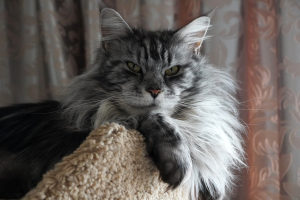
Even when they are not actively hunting, cats love looking over their surroundings from high perches. Maximizing the vertical space and providing access to high perches creates a sense of security and makes your cat feel like the king (or queen) of their domain. Giving your kitty a bird’s eye view helps satisfy their inner hunter.
Prioritize Interactive Play
Interactive play is vital for cats. In addition to keeping them active, it engages their predatory instinct and fulfills their desire to hunt. The key is to look for toys you can move for them—cats quickly become bored with toys that sit still, because they don’t behave like prey.
Feather toys are favorites for most cats because they mimic the behavior and appearance of birds. Wand toys let you make a toy dart, pause, and hide the way real prey does, which is far more compelling to a cat than a toy that simply moves in circles. Invest in several, and change them out regularly to keep your cat engaged.
During playtime, be sure to let your cat catch the toy once in a while. This will give them the thrill and satisfaction of a successful “kill.” Aim for a few short sessions a day rather than one long one, and try to finish a session before bed so your cat is more likely to settle overnight. Always put away toys with strings, ribbons, or wands after playtime and store them out of reach—cats are often tempted to swallow string-like items, which can cause a life-threatening obstruction in their gut.
Keep Them Busy While You’re Away
When you can’t be home playing with your cat, leave out safe toys that encourage them to play. Puzzle toys and interactive feeders are great options. In addition to encouraging your cat to “hunt” for meals, these toys provide the satisfaction of a successful hunt in the form of food or a tasty treat. Try hiding small portions of their daily ration in a few places around the house so they have to go looking for it.
Be mindful when choosing toys for your cat to enjoy while you are away. Make sure they are sturdy, too large to swallow, and free of small parts, strings, or elastic that could come loose.
Try a Laser Pointer
Laser pointers can be useful for interactive play. They engage cats’ hunting instincts and make it easy to play with your feline friend even when you’re exhausted after a long day at work. Always use lasers with caution, though, and never shine them at your cat’s eyes or anyone else’s, as they can cause serious damage.
To avoid frustration, end each laser play session by leading the dot to something your cat can actually “kill.” A catnip kicker toy that they can really sink their claws into is a good option. The key is making sure there’s some reward to make your cat feel like the hunt was successful, because a hunt that never ends in a catch can leave a cat wound up rather than satisfied. If your cat seems frustrated because they cannot catch the dot, stick to playing with physical toys they can capture.
A cat’s predatory instincts don’t disappear just because they live indoors. By providing the proper stimulation and environmental enrichment, you can satisfy those instincts while keeping your cat (and your local wildlife) safe. In doing so, you can prevent boredom and frustration and keep behavioral issues at bay.
As your cat’s vet, we are here to help you give them the best life possible. Whether you need help with behavioral issues or advice on creating a more stimulating environment for your feline friend, we encourage you to reach out to us. Contact us today for the expert veterinary advice you need.