
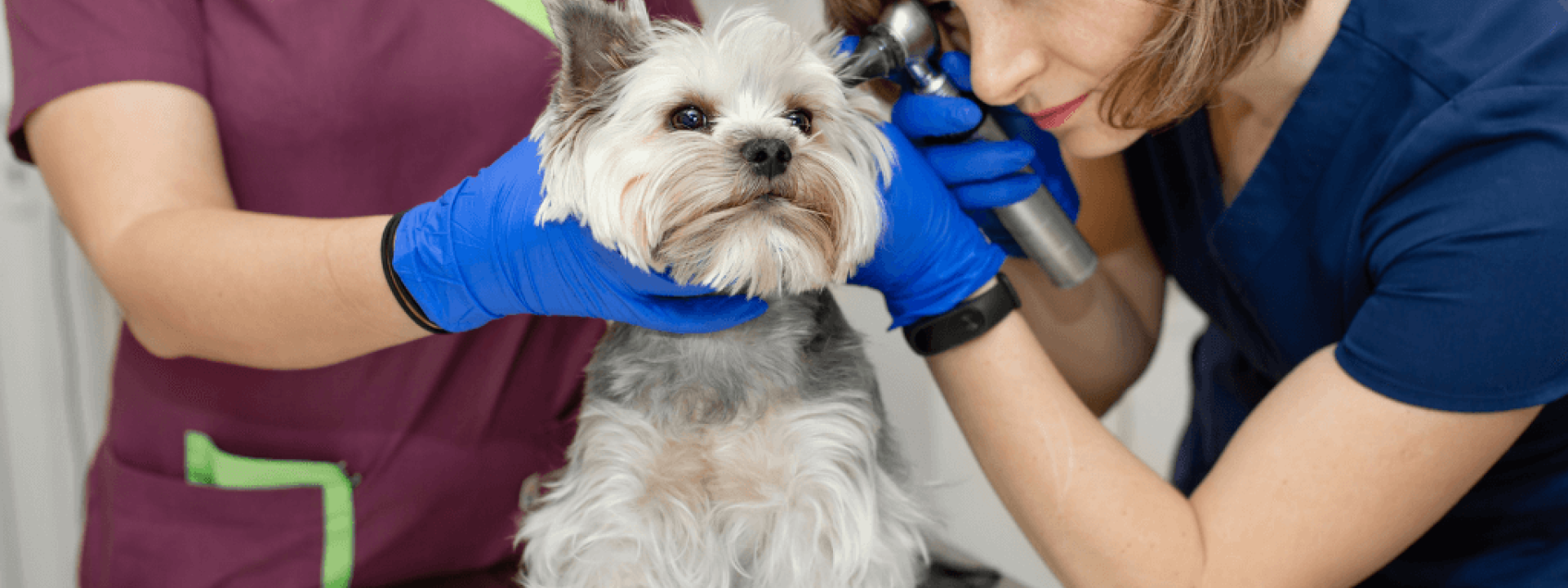
Deaf Pet Awareness Week falls in late September each year, when owners of these special pets celebrate the lives of their faithful companions and the unique relationship they have. While deafness is a disability, it’s often overlooked because the pet isn’t visibly struggling with mobility. Deaf pets do need to adapt to a different way of life, though, much as a dog with an amputated limb or a cat with one eye does. With proper training and a devoted owner, a deaf dog or cat can still live their best life.
Identifying Deafness
Deafness can be present from birth, or acquired later in life. Congenital deafness is linked to certain coat color patterns—it’s more common in dogs with a lot of white in their coat and in merle-patterned breeds such as Dalmatians, Australian Shepherds, and Border Collies, and in white cats with blue eyes. Age-related hearing loss comes on gradually, much as it does in people. Some dogs and cats also lose hearing as a result of chronic ear infections, and certain medications can affect hearing, which is one reason we’re careful about which ear treatments we dispense.
Signs of deafness in dogs include:
- Lack of attention when you call their name
- No longer coming to the door when someone arrives home
- Sleeping very deeply, or being startled easily when woken
- Not responding to squeaky toys during playtime
- Barking more loudly than usual, or unusually often
- Difficulty telling where a sound is coming from, which can be an early sign of partial loss
If you suspect hearing loss, try rattling your car keys, squeaking a toy, or clapping your hands while you and the object are out of your dog’s line of sight. No response suggests hearing loss and is worth an appointment with us. Do bear in mind that a home test isn’t conclusive—dogs feel vibration and air movement, and a dog who is simply engrossed in something may ignore you. There are also treatable causes of hearing loss, such as a build-up of wax or debris, an ear infection, or a growth in the ear canal, so it’s worth having us look before you conclude it’s permanent.
Communication & Training
The primary difference between a deaf dog and a hearing one is how you communicate. Deaf dogs depend on visual cues, so hand signals become the foundation of everything, much like sign language between people. In fact, signs borrowed from American Sign Language work well for deaf dogs, including hand cues for “sit,” “stay,” “come,” and “lie down.” Whatever signs you choose, keep them distinct from one another and use them consistently—and make sure everyone in the household uses the same ones.
Positive reinforcement is the approach to use, whether you’re training a puppy who was born deaf or an older dog whose hearing has faded. Reward them the moment they respond to a visual cue and they’ll pick the cues up quickly. You’ll need a way to mark the correct behavior in place of a clicker or a word of praise—a thumbs-up, a particular hand flash, or a small vibrating collar all work well for this. Over time your dog will adapt, becoming keenly aware of their surroundings and picking up on floor vibrations as people approach.
A note on collars: a vibration collar is a useful tool for getting a deaf dog’s attention, and it is not the same thing as a shock collar. Look specifically for a vibration-only model, introduce it gradually with treats, and never use it to startle or correct your dog.
Getting Their Attention
As a dog owner, you get used to petting your dog on impulse, initiating play, and calling their name for attention. With a deaf dog, all of that needs adjusting. Because they can’t hear you approaching, a sudden touch or a ball appearing out of nowhere can startle them. It’s worth teaching a gentle, consistent way of waking or approaching them—a light touch always in the same place, such as the shoulder, followed immediately by a treat, so being touched becomes something good rather than a surprise. This matters particularly with children in the house, who need to learn not to sneak up on or hug a sleeping deaf dog.
Let them see you before you pet them, show them a toy before you start playing, and at a dog park watch for other dogs approaching from behind so you can make sure your dog sees them coming first. Some deaf dogs are perfectly happy at a busy dog park and others find it overwhelming, so it’s worth seeing how yours responds rather than assuming either way.
ID Tags & Protection
Deafness means being more vigilant about safety, since your dog can’t hear traffic, a horn, a barking dog, or other dangers nearby. For that reason it’s important to keep your dog leashed outside a securely fenced area—both for their safety and because they can’t hear you calling them back if they take off after a squirrel. A long training line in a safe, enclosed space is a good way to give them freedom to run without the risk.
Consider a personalized tag that carries your name and phone number and also identifies your dog as deaf, so whoever finds them knows why the dog isn’t responding to them. Microchipping is a must as well—and if your dog is already chipped, take a minute to check that your contact details are current with the registry, since an out-of-date chip can’t bring them home. A deaf dog startled by an unexpected visitor at the door is exactly the kind of dog who bolts, so it’s worth having both safeguards in place.
What About Deaf Cats?
Much of the above applies to cats too. Congenital deafness is well recognized in white cats with blue eyes, and older cats lose hearing just as dogs do. Deaf cats can live full, happy lives, though the case for keeping them strictly indoors is even stronger than usual—a cat who can’t hear a car or a dog approaching is at far greater risk outdoors. Hand signals and a flashlight work for cats as well, and many deaf cats become particularly attentive to vibration and to their people’s movements around the house.
If you’re looking to adopt, do consider a deaf or partially deaf dog or cat at your local shelter. They’re every bit as deserving of a home as any other animal, and they wait longer than most. While it takes a little more care and thought to communicate with a deaf pet, they lead fun, playful, healthy lives just like their hearing counterparts. If you’ve recently adopted a deaf pet and would like more tips, or you need to get them in for their first wellness exam, please feel free to give us a call!