
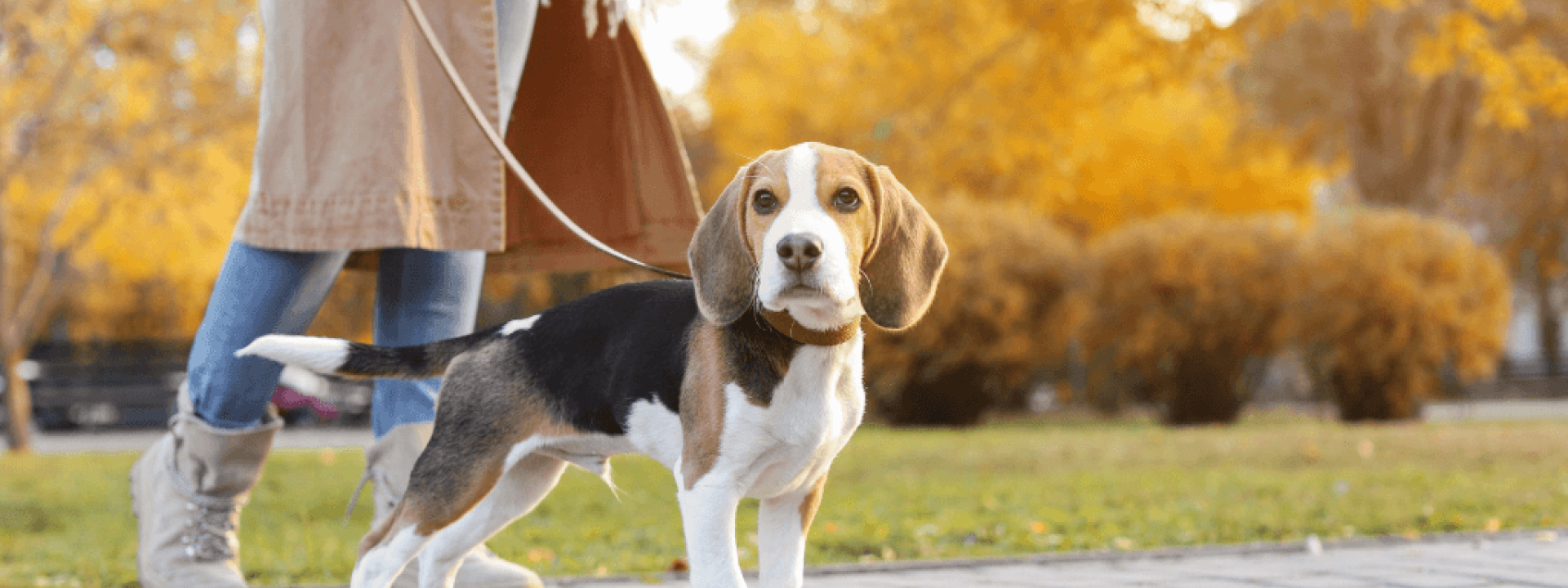
Many new dog owners are surprised to learn that their puppy doesn’t instinctively know how to walk politely on a leash. They understand the reality quickly during the first few walks, when their new little fur friend is bolting until they run out of leash or tugging the entire way. Walking nicely on a leash is a skill that has to be taught, and the good news is that the method is straightforward. A few steps will have your new puppy “loose leash” walking alongside you instead of pulling you along, so that you can both enjoy the many benefits of exercise.
Introduce a Collar or Harness
If they haven’t been wearing one yet, a collar or harness is a new feeling for your puppy that will take some getting used to. Put the collar or harness on them for short periods inside, and when they accept it and stop pawing at it, reward them with a treat. This will help them associate their collar or harness with a positive experience.
For walking, a well-fitted harness is usually a better choice than a collar, particularly for a dog who pulls—it spreads the pressure across the chest rather than concentrating it on the throat. Front-clip harnesses can help a good deal with pulling. We’d steer you away from choke, prong, and shock collars: they work by causing discomfort, they carry a real risk of injury, and they tend to create new problems rather than solve the original one. If you’re not sure what would suit your dog, ask us and we can talk it through.
Teach a Command
Introduce your dog to a sound or word that will become a cue meaning a treat is coming.
Follow these steps to get your dog to respond and come to you whenever they hear your chosen training word:
- Put your dog on a leash inside and make the sound or say the word you’ve chosen. When your dog turns to you, immediately reward them with a treat.
- Repeat until your dog reliably comes to you when they hear the sound or word.
- After they’ve come to you a few times, start backing up a few steps and give them the treat as they come toward you.
- Continue until your dog is coming to you and walking a few paces alongside you before you give them the treat.
- Once you’ve mastered the steps above, take your dog outside on the leash. Use the sound or word whenever they get ahead of you, start tugging, or bolt forward to chase something.
Be patient, as the noises, smells, and small animals and birds you encounter outside will be distracting. Keep sessions short—a few minutes at a time works better than a long slog—and only reward your dog when they respond to the sound or word and come to you. It also helps to start somewhere quiet, such as your yard or a empty street, before working up to busier places.
Some trainers and dog owners use clicker training to help achieve the above steps. The American Kennel Club explains how clickers work and why some people prefer them to a sound you make or a word you speak.
Correcting Leash Problems in Older Dogs
If you adopted from a shelter or never got around to leash training your puppy, it’s not too late to teach an older dog to walk properly on a leash.
The following are the most common walking habits dogs develop and how to address them:
- Pulling—If your dog constantly yanks the leash and drags you along, stand still and don’t take another step until the leash goes slack and your dog turns back toward you. Repeat this until they learn that pulling stops the walk and a loose leash starts it again. Bring treats for positive reinforcement when they walk alongside you without pulling.
- Lunging—If your dog lunges at everything they encounter, whether another dog, a squirrel, a runner, or a stick on the ground, increase the distance between your dog and whatever has their attention, then reward them for turning back to you. This requires being alert and staying a step ahead of your dog in terms of what’s coming up ahead.
- Barking—If your dog barks at everything they see, it may partly reflect a need for more mental and physical stimulation, but it’s more often a reaction to something they find exciting or worrying. Handle it much like lunging: put more distance between your dog and the trigger, and reward them for looking at you before they have a chance to react. Over time they’ll begin to associate seeing another dog or a squirrel with turning their attention to you instead.
If your dog’s reaction to other dogs or people looks like fear rather than excitement, or if they’re growling, snapping, or so worked up that they can’t take a treat, please talk to us before continuing. Reactivity of that kind needs a more structured plan than a page like this can offer, and pushing on with walks that overwhelm your dog usually makes things worse.
You’ve likely noticed these tips involve giving your dog a lot of treats, which is a normal part of positive reinforcement training. Use small, soft treats so you can give plenty without overfeeding, and count them toward your dog’s daily calories. As their behavior improves and they consistently respond well to what they encounter on a walk, you can gradually reduce the treats—though it’s worth keeping a few with you to reinforce the training when you need to.
As with any dog training, patience and consistency are essential, and especially so with leash training. Yanking or jerking the leash out of frustration can genuinely hurt your dog—neck and spinal injuries, damage to the windpipe, and injuries to the nerves of the front legs are all possible, particularly with a collar rather than a harness. Always choose positive reinforcement when leash training, and you’ll avoid injuring your dog while making the training far more effective.
If you’ve tried all of these dog walking tips and are still struggling, a certified trainer may be the answer to a future of safe, fun, and fulfilling dog walks. Give us a call, and we’ll be happy to give you a recommendation!